What we do
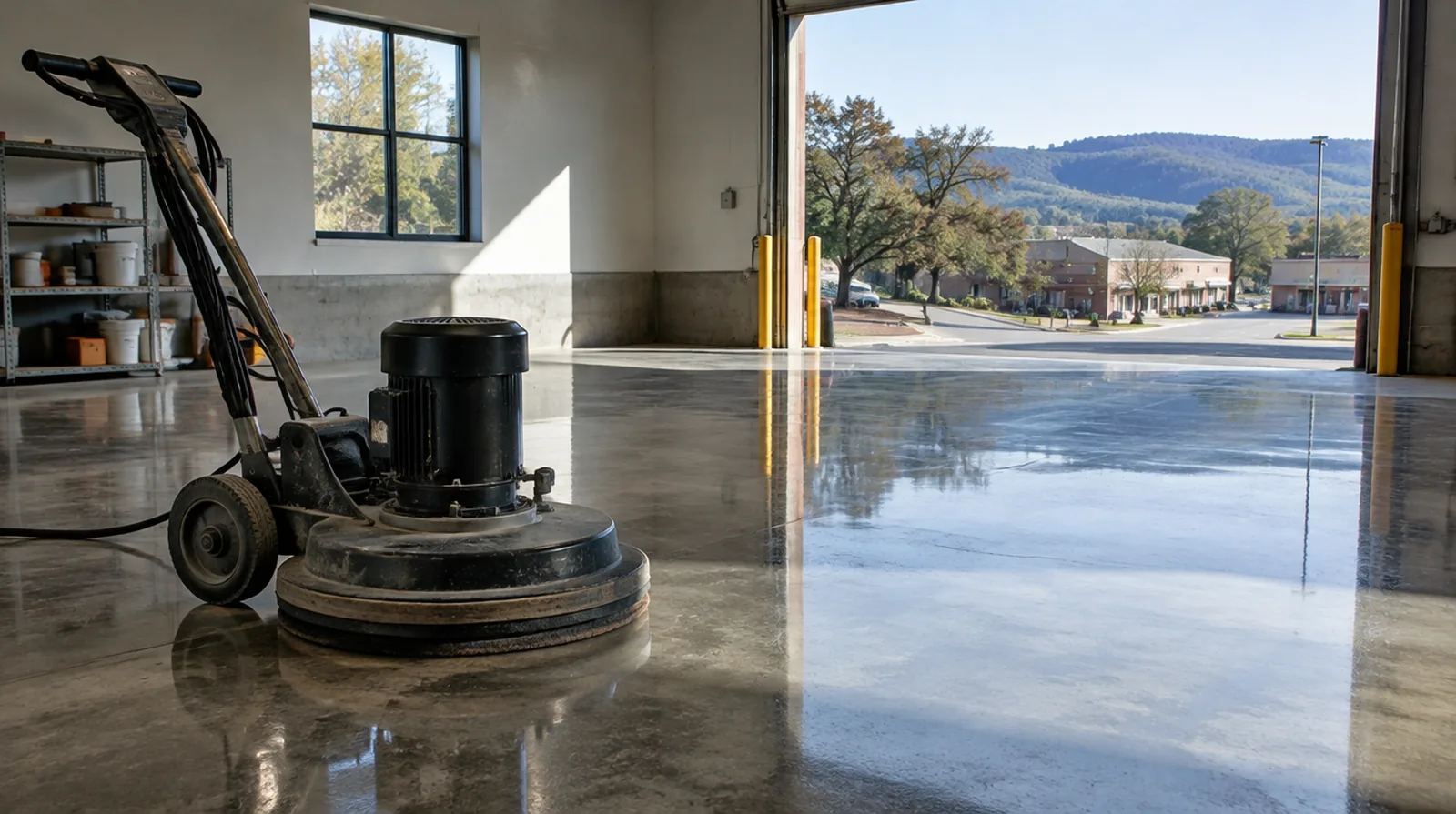
Grind the slab smooth and flat. Treat it with a hardener so the surface is tougher. Work through a sequence of finer diamonds until it reaches the sheen you picked. Add a stain guard. If you want more detail on that middle stage, this explainer on how polishing grits step up follows a slab from coarse diamonds to the final pads.
Who chooses it
Retailers, offices, and modern homes, often with large open floor plans. It handles carts and foot traffic well.
Character
Every slab has its own look. Aggregate, small patches and saw cuts can show, which many owners like.
Daily care
Sweep or dust mop, and clean with a gentle cleaner. Occasional buffing restores shine.
When to coat instead
If your slab is badly worn or stained, a coating will look more even.
Retail and office corridors
Rogers has a lot of retail and office space along its commercial corridors, and some of those buildings have slabs that polish beautifully. Polishing is also a good way to refresh a space after removing old carpet or tile.
Polishing questions
Can a showroom be polished? Yes, and a high gloss makes vehicles and products stand out.
Is it good for a lake house? Yes, indoors, and it handles sandy feet.
Will cracks show? Yes, though we can fill them.
How long does it take? Two to four days for most spaces.
Polished concrete in Rogers suits offices, retail, showrooms and modern homes. We grind with coarse diamonds, fill cracks, densify and refine with finer pads to the sheen you choose, then add a guard sealer. Vacuums capture dust throughout. Daily care is a dust mop and a neutral cleaner, with a burnish every year or two in busy areas.
When a coating is the better choice
If the floor sees oil, chemicals or constant water, or if the slab is patchy and you want a uniform look, a coating serves better than polish. Boat service bays and wash areas are good examples. We walk the space and tell you honestly which option fits before you spend anything. For offices and retail corridors, a satin polish hides scuffs and cleans with an auto scrubber.
Grind levels
A light grind keeps a creamy surface. A deeper grind exposes the stone for a salt-and-pepper or terrazzo-like look. We show samples first so you can choose.
Dye options
Dyes added during polishing can warm plain gray concrete for living spaces.
Polish timeline
Two to four days for most spaces.
Taprooms, gyms and gathering spaces
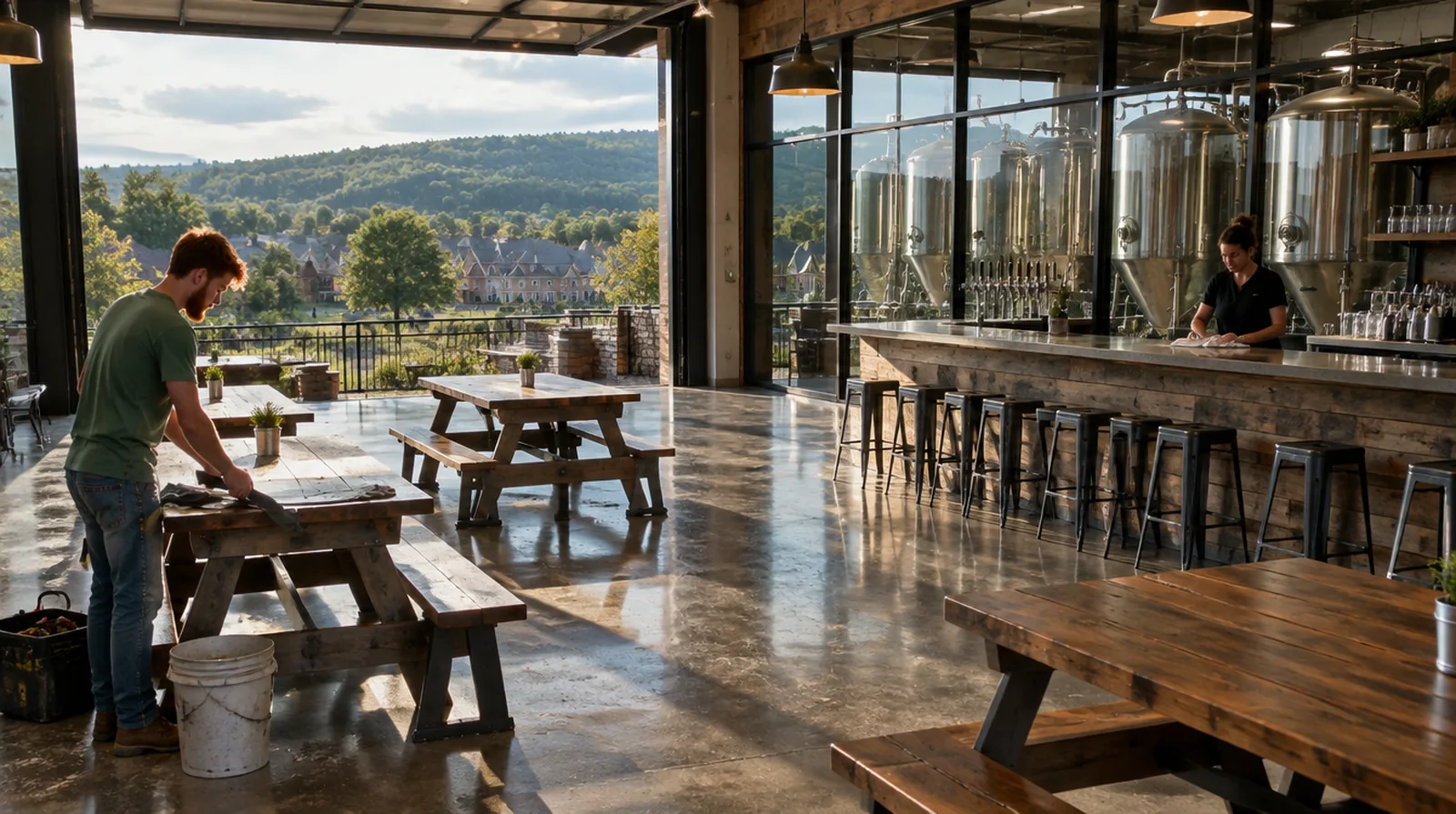
Rogers and its neighbors have seen a wave of breweries, taprooms, coffee shops, climbing gyms and fitness studios open in older industrial buildings and new strip centers. Polished concrete is a popular floor for these spaces. It holds up to chairs and tables being dragged, spilled drinks and wet shoes, and it has a clean, open look that suits exposed beams and big windows.
Spills and cleaning in food and drink spaces
Polished concrete is dense, but it is still concrete. Beer, wine, coffee and citrus can etch or stain the surface if they sit too long. For taprooms and cafes we add a guard sealer after polishing and recommend a neutral-pH cleaner for daily mopping. Spills wiped up in a reasonable time leave no trace.
Gyms and fitness studios
In a gym, polished concrete works well in walkways, locker areas and open floor space. Heavy free-weight zones usually get rubber mats on top, and the polished floor around them stays easy to clean.
Older industrial floors
Buildings that once held light manufacturing often have slabs with old anchor holes, saw cuts and patches. We fill those before polishing. The repairs will show slightly, and many owners like that record of the building's past.
Choosing a sheen
A satin sheen hides scuffs and is comfortable under bright lights. A high gloss reflects windows and fixtures and gives a bigger feel to a room.
Polishing question
Can you polish while the business stays open? Partly. We can work in sections after hours, with dust collection on every grinder.
Ask about polishing
Call (479) 391-5142.