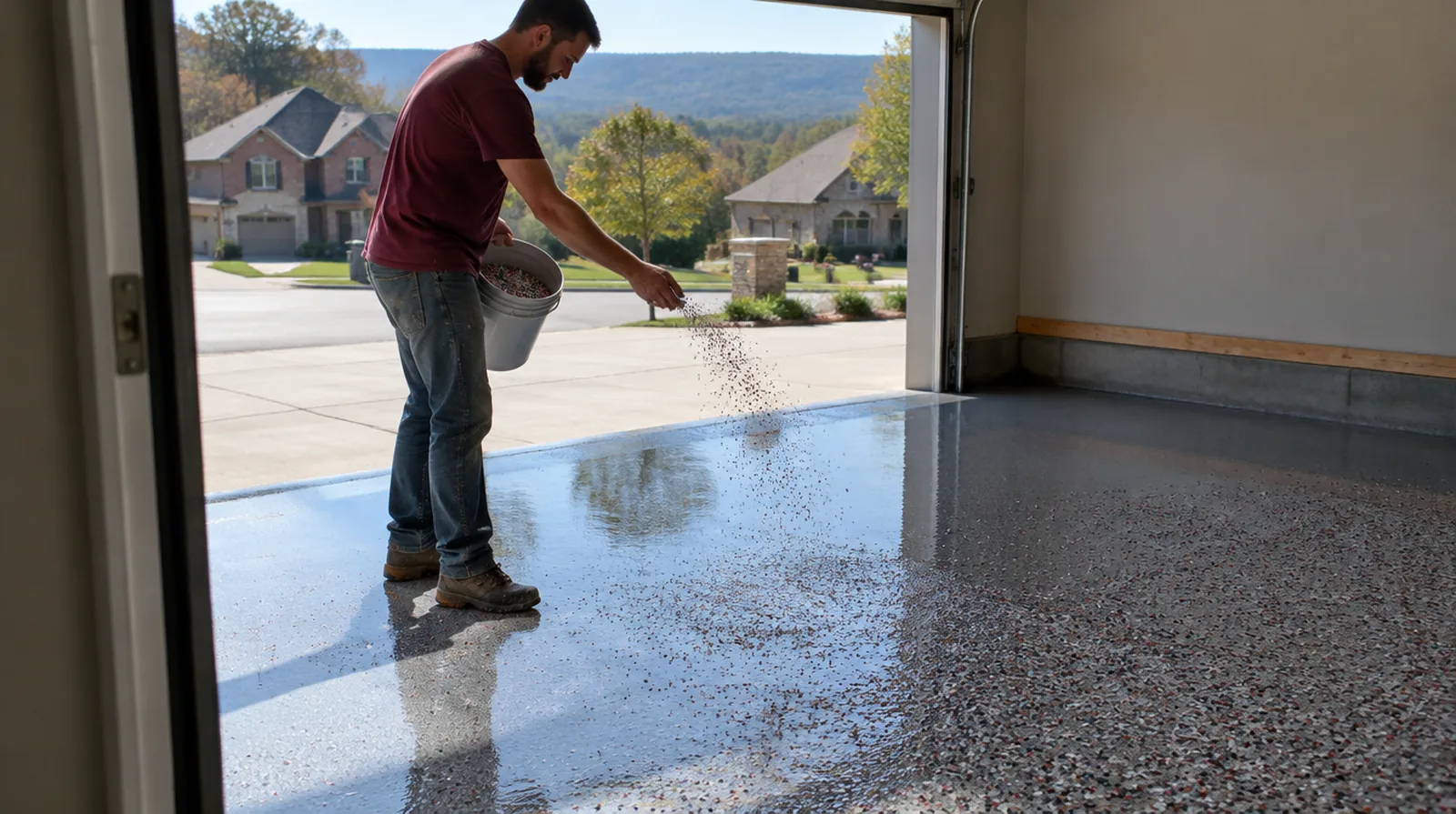
A forgiving finish
A full broadcast of vinyl chips creates a speckled pattern that camouflages dust, sand and small scuffs. The floor looks clean even between washes.
How we put it down
Grind, prime, base coat, broadcast, scrape, clear coat. The broadcast covers the base entirely, so the color comes from the chips, not the paint underneath.
Choosing chips
- Larger chips give a bold, sporty look
- Smaller chips look more like stone
- Light blends brighten a dark garage
- Darker blends hide more dirt
Good uses beyond the garage
Mudrooms where wet lake gear comes in, laundry rooms, covered porches, and workshops.
Texture
The chips add a bit of texture by themselves. For extra grip on a ramp or near the door, we can add grit to the clear coat.
For a sleeker look in a living space, see metallic floors.
Flake questions from Rogers homeowners
Will a wet boat trailer ruin it? No. The coating sheds water; just squeegee puddles out.
Which colors hide lake sand and red clay? Tan, brown and gray blends.
Can I coat the walkway into the house? Yes, with grit added.
How long does it take? One to two days.
A flake floor is the most popular garage finish in Rogers because it handles real life: kids, dogs, bikes from the Railyard and the Greenway, coolers and life jackets coming home from Beaver Lake. The chips hide dirt and small marks, and the texture adds grip on wet days. For hard-use garages we add a second clear coat, which also smooths the surface so it sweeps easier. We bring large sample boards so you can compare blends in your own garage light before choosing.
How we install it
We grind, repair cracks and roll a base coat, then broadcast chips until the base disappears. After cure we scrape off loose chips, vacuum and apply a clear top. Foot traffic the next morning, cars a few days later. We tape off walls and cabinets carefully and clean up when we finish, leaving written care tips behind.
Chip size
Quarter-inch chips suit most garages. Smaller chips give a finer look in laundry rooms and mudrooms, and larger chips hide more dirt.
Cleaning
Sweep, rinse and mop with mild soap.
Scraping, sealing and why the last steps matter
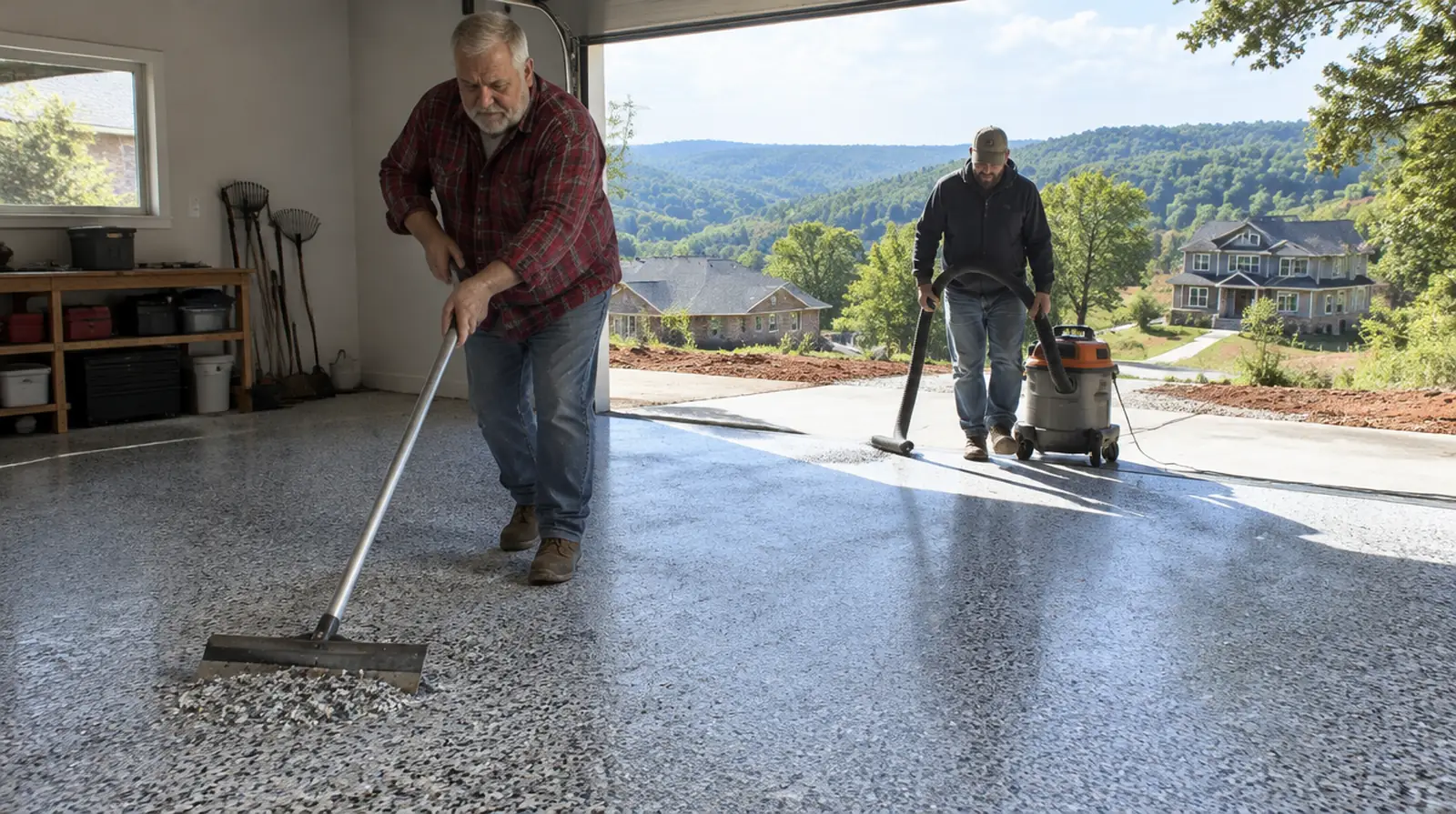
The broadcast is the step people remember, because it looks dramatic: handfuls of colored chips thrown across a wet base coat until the gray concrete disappears. The quieter steps that follow decide how the floor feels underfoot for years. Once the base has cured, we push long-handled scrapers across the whole floor to knock off any chip that is standing on edge or loosely stuck. Then the floor is vacuumed more than once, because a single loose chip trapped under the clear coat leaves a sharp bump.
Only after that does the clear topcoat go on. It locks the chips in place and decides the final texture. One coat leaves more grip; a second coat makes the surface smoother and easier to mop. Garages that see a lot of wet traffic from the lake or rainy-day errands usually do well with a single heavy topcoat and a light texture.
Blends that suit Northwest Arkansas homes
Owners here tend to choose blends that work with brick and stone exteriors. Warm mixes with tan, brown and a little cream look natural next to a red brick ranch. Gray and black blends with white accents fit the newer craftsman homes with darker trim. If red clay is a constant visitor, a blend with a touch of rust or terracotta helps hide the stains between cleanings.
Full broadcast or partial?
A full broadcast covers the base completely and gives the most even look and grip. A partial broadcast scatters fewer chips over a solid color for a more speckled style. Partial floors cost a bit less in material, but they show dirt more like a solid coat would.
Flake question
Will the chips fade in a garage that faces west? The chips themselves hold color well. The topcoat choice matters more, and a UV-stable clear protects against yellowing in strong afternoon sun.
See chip blends in person
Call (479) 391-5142.