Outdoor slabs in a growing city
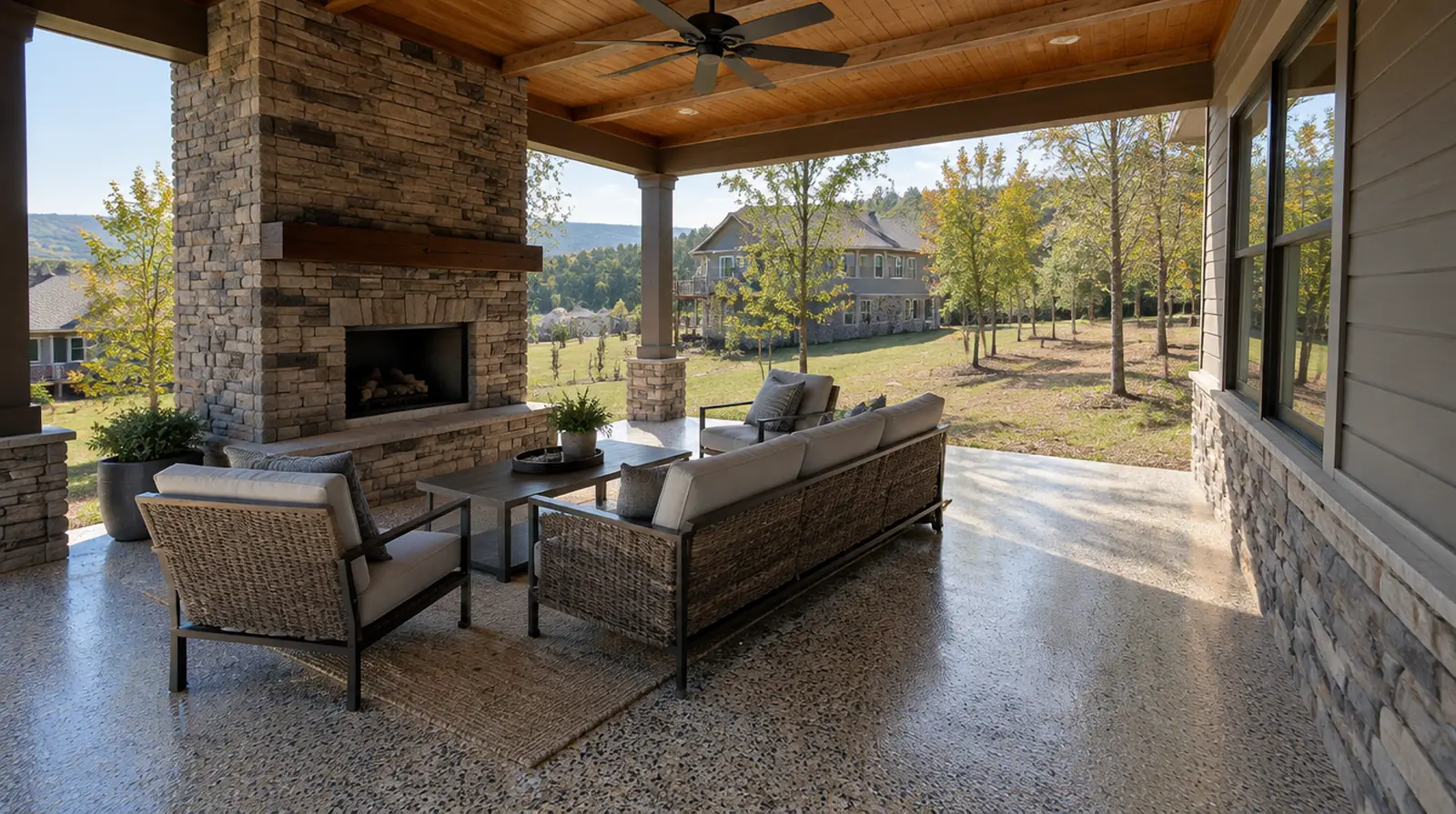
A lot of Rogers housing is newer. Subdivisions around Pinnacle Hills, the west side and the roads heading toward Lowell and Bentonville were built with large covered patios that are meant to be an outdoor living room. Older neighborhoods near downtown and around Lake Atalanta have brick ranches from the 1970s and 1980s with uncovered back slabs. Out toward Beaver Lake, there are lake homes with patios, walkout basements and steps down sloped lots. All of them start as plain concrete, and plain concrete stains, fades and wears.
Our patio coating system
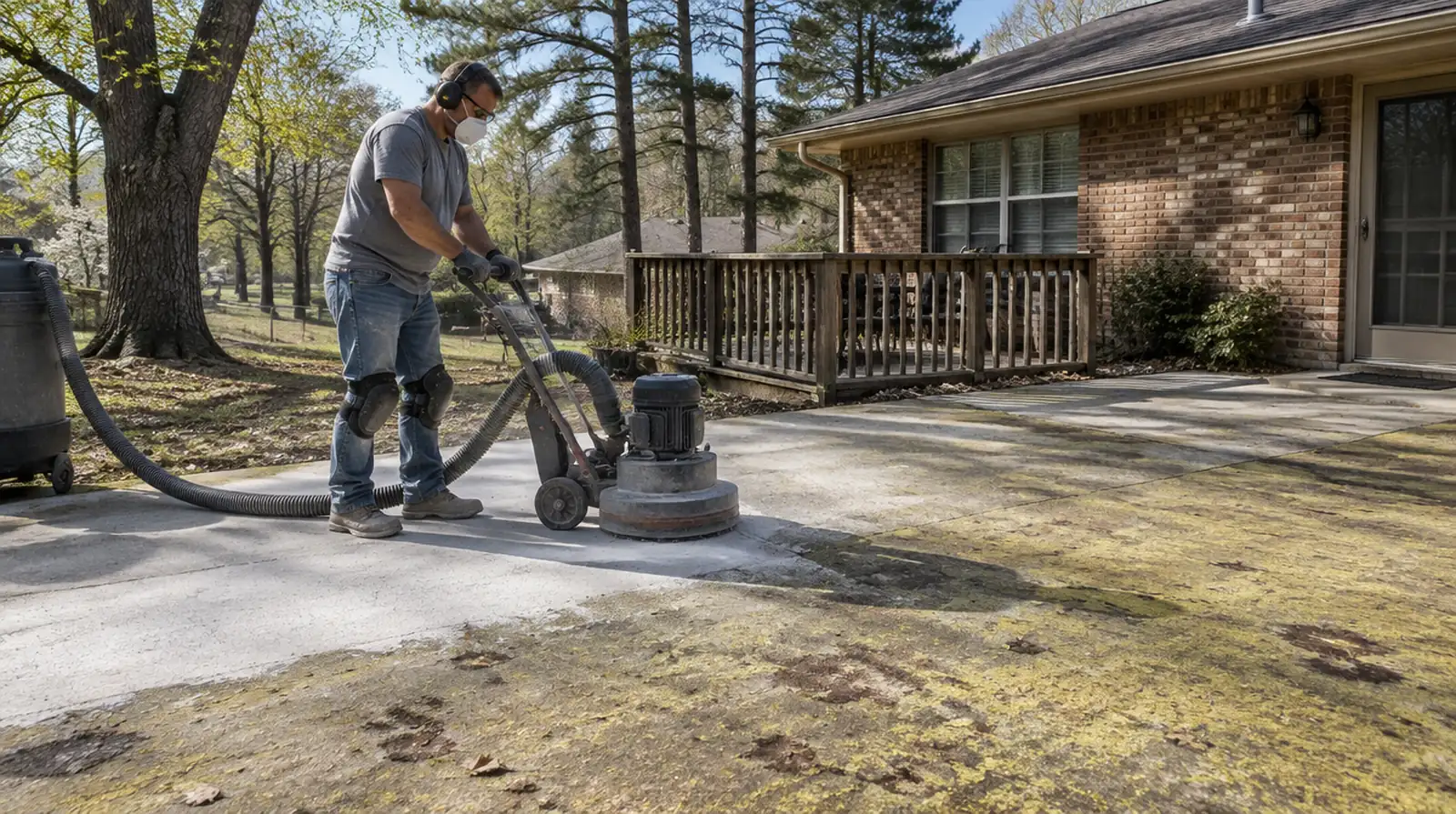
Every patio is diamond-ground first. That removes the cure-and-seal film builders often put on new concrete, along with old paint and sealer, so the coating bonds to the concrete itself. Cracks and chipped edges are repaired. A base coat goes down with a full broadcast of decorative flake, and a UV-stable polyaspartic topcoat locks it in. Unlike garage epoxy, polyaspartic does not yellow outdoors. We blend grit into the topcoat so it is not slick when wet.
- Colors from light gray and sand to darker stone blends.
- Extra traction on steps, ramps and pool edges.
- Clean edges at stone veneer, brick and siding.
- Matching coatings for porches and walks.
Northwest Arkansas weather
Winters here go back and forth across freezing, with ice storms some years and plenty of nights in the twenties followed by sunny afternoons. Water that soaks into bare concrete freezes and expands, slowly popping the surface. A sealed coating keeps that water out of the top of the slab. Spring brings heavy rain, hail and thick yellow oak and pine pollen that coats everything. Summer brings humid heat, when shady patios grow mildew. A coated surface rinses clean and does not hold onto those stains the way porous concrete does.
Rocky ground and cracks
Benton County has thin soil over limestone and chert, and many lots were graded with fill to create flat building pads. Slabs on that kind of ground can crack where fill settles or where a patio meets an older foundation. We repair stable cracks before coating. If a section has dropped noticeably or keeps moving, we will tell you before we start, because a coating cannot fix the ground underneath.
Lake homes and sloped lots
Homes near Beaver Lake and on the hillier east side often have patios at the bottom of walkout basements, steps between levels and slabs that catch runoff from the yard above. We coat each level and the steps with extra traction, and we look at where water comes from before quoting. Runoff carrying red dirt and gravel across a patio will keep scratching and staining any surface, so a small drain or a gravel edge can make a coating last much longer.
Scheduling and cure time
Spring and fall are the busiest seasons. The slab must be dry and within the product's temperature range, so we watch for rainy stretches and very cold mornings. In July and August we start early. Most patios are coated in one day. You can walk on it the next day, and furniture and grills can return a day or two later.
Keep it looking new
Rinse off pollen in spring, sweep leaves in fall and wash with mild soap as needed. Use a grill mat to catch grease. Avoid metal shovels and sharp scrapers on the surface in winter. Ice melt that is safe for concrete is fine to use.
More outdoor concrete
Pair the patio with a driveway coating or pool deck coating so outdoor surfaces match. Inside, see garage floor epoxy and epoxy flake flooring.
Patio coating questions
Can you coat around a fire pit?
We coat up to a raised stone or metal fire pit, but we keep the finish back from the direct heat and recommend a spark screen. Loose embers can mark any topcoat.
Do you work outside Rogers?
Yes, including Lowell, Bentonville, Pea Ridge, Garfield and Cave Springs.
Get your patio priced
Call (479) 391-5142. Tell us how big the patio is and whether it is covered, and we will set up a visit.