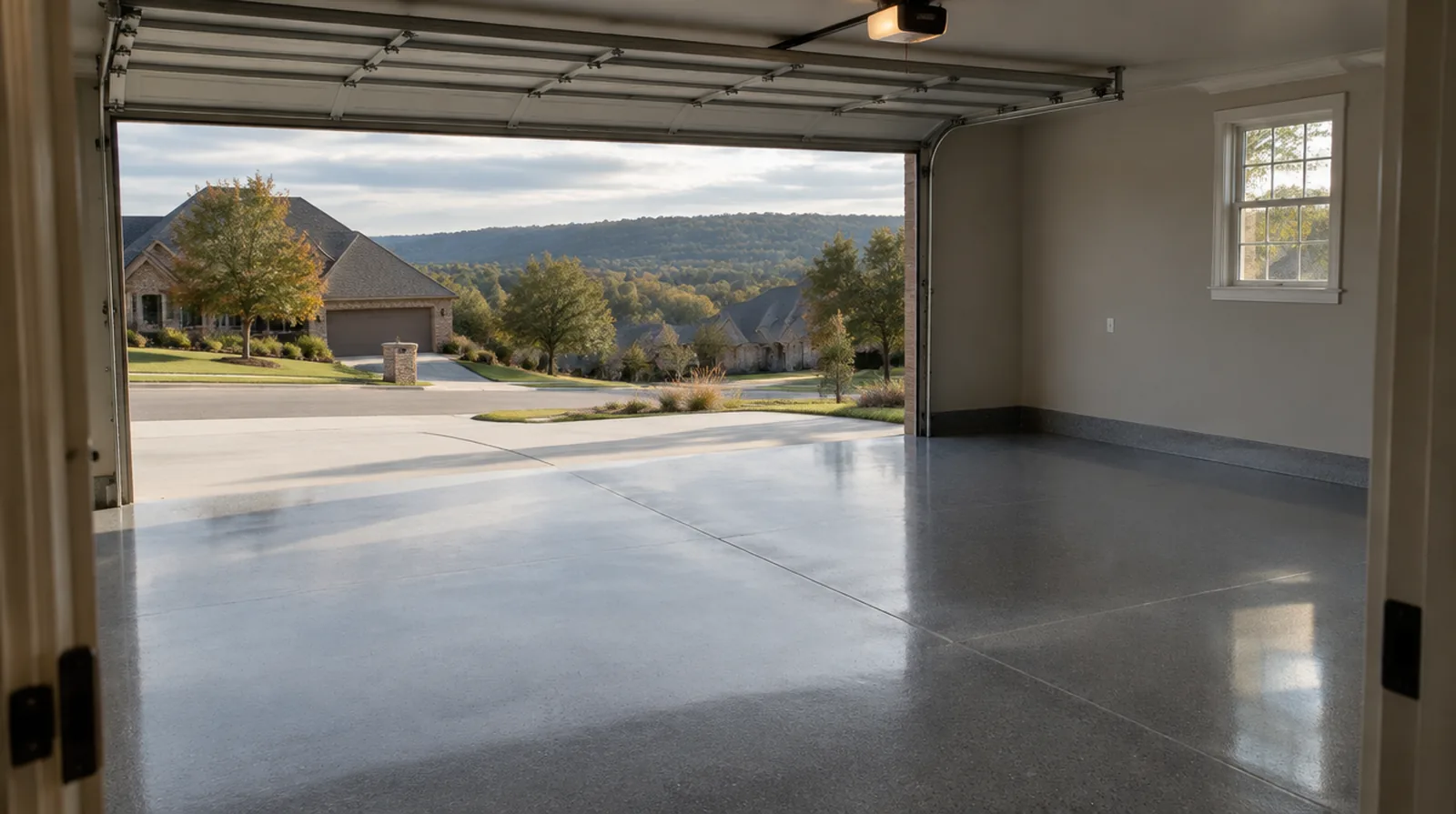
Built from the slab up
- Grinding opens the concrete so the coating can grab on. We use diamond grinders hooked to vacuums.
- Repairs fill cracks, chips and joints so the finished floor is smooth.
- Primer soaks into the concrete and anchors everything above it.
- Body coat adds color, with or without chips.
- Top coat takes the wear and makes cleaning simple.
Lake gear and wet tires
Trailers and boats drip. Lake water and sand get tracked across the floor all summer long. On a coated floor, you rinse it toward the door and squeegee it out. A little texture in the top coat makes wet areas less slick.
Young slabs in new neighborhoods
New homes around Pinnacle Hills often have slabs that are only a year or two old. Those are great candidates, but concrete needs time to cure and dry out. We test before coating very new slabs.
Older slabs downtown
Older garages may have oil stains, paint and cracks. Grinding removes most surface staining. Deep oil may need extra cleaning.
Downtime
Two days is typical. Polyaspartic tops can cut that.
Garage questions we hear in Rogers
Can my boat and truck share the garage? Yes. We build thicker where trailers park and add a pad under the jack.
Will lake water stain it? No, the coating sheds it.
How long before I can park? Usually a few days, depending on temperature.
Do you coat garages in Pinnacle Hills? Yes, often three-car garages with storage systems.
Garage floor epoxy in Rogers follows the same steps every time: test, grind, repair, prime, color or flake, clear top. What changes is how much repair the slab needs and how thick to build the system for your vehicles and gear. We give you a written price before we start.
Install days
Day one is grinding with vacuum-equipped machines, crack repair, primer and the body coat. Day two is scraping and the clear top. Before we leave, you get written times for walking, moving things back and parking. If lake season is close, ask about a polyaspartic top to shorten the wait. Install cabinets and storage racks after the floor cures for the cleanest edge.
Cost factors
Size, slab condition, crack repair and the system you choose set the price.
Workbenches, freezers and the stuff that lives along the back wall
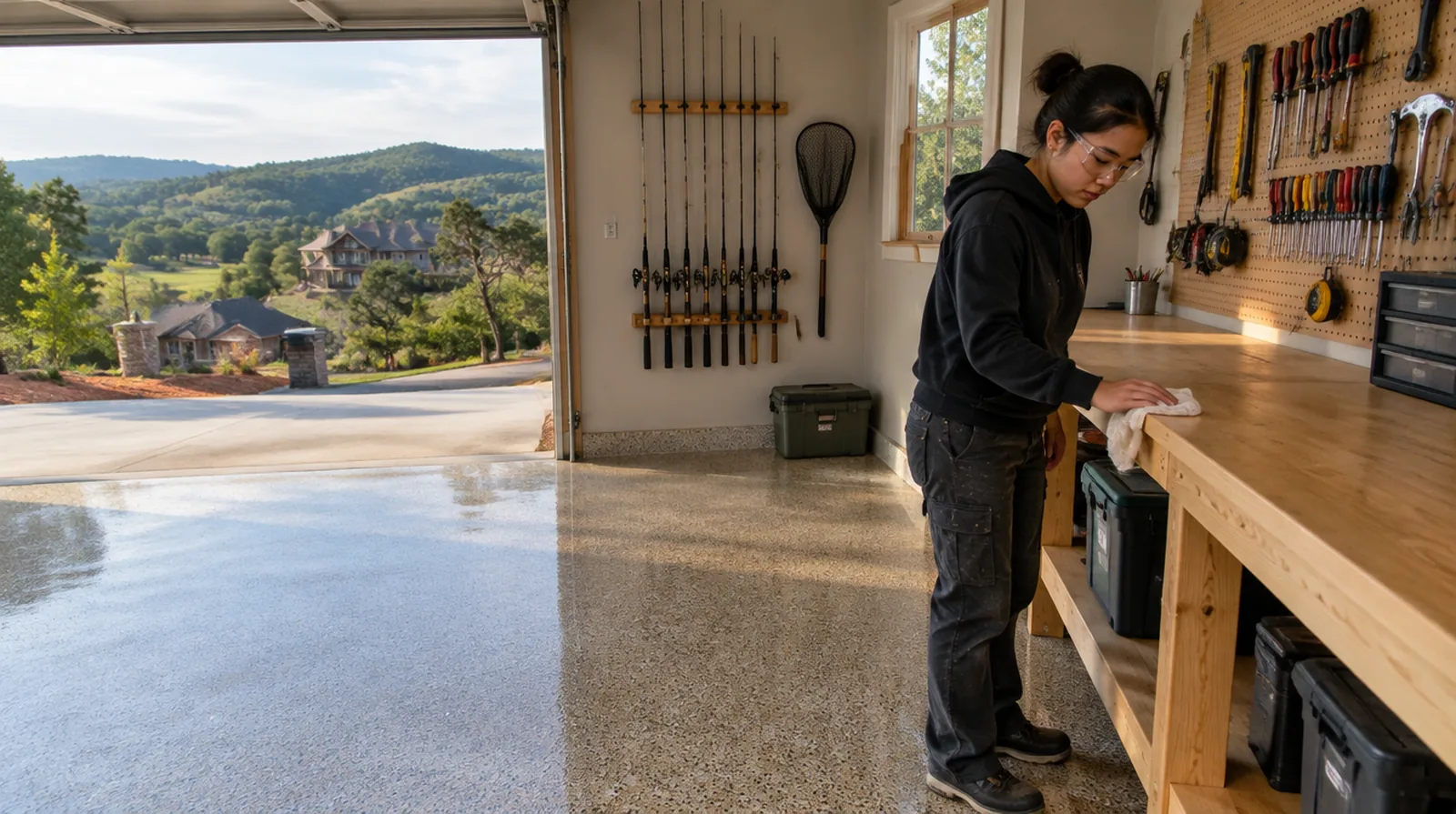
In a lot of Rogers garages, the back wall does as much work as the parking bays. There is a workbench with a vise, a pegboard of tools, a chest freezer full of venison or fish, a rack of rods and tackle boxes, maybe a second fridge for the lake weekends. Those zones take a different kind of abuse than the tire paths. Dropped wrenches, sawdust, stain and paint drips, and the occasional leak from a freezer that was unplugged too long all land right there.
We plan the coating with those zones in mind. Under a workbench we often recommend a slightly heavier build so dropped tools do not chip through to the concrete, and a finish with a little texture so you are not standing on a slick surface while you work. Where a freezer or fridge will sit, we coat the full area underneath, so any condensation stays on top of the floor.
Moving heavy items back in
Once the floor has cured, heavy appliances and rolling tool chests can go back. We suggest sliding a piece of plywood or a furniture dolly under anything with narrow metal feet for the first move, and adding felt or rubber pads to the legs of benches and shelving units so they do not scuff the topcoat.
Small garages in older parts of town
Some homes closer to downtown have one-car garages or narrow two-car spaces built decades ago. In a tight space, lighter flake colors and a gloss topcoat bounce more light around, which makes a real difference when the only window is a small one on the side wall.
Another question
Can I hang storage on the walls after the floor is done? Yes. Just keep drill dust and dropped anchors swept up, and avoid dragging a ladder with bare metal feet across the finish.
Get your garage floor quote
Call (479) 391-5142.